Overview
A CPAP (Continuous Positive Airway Pressure) machine is a medical device that delivers a steady stream of pressurized air through a mask to keep your airway open during sleep, preventing the breathing pauses caused by obstructive sleep apnea.
CPAP therapy was invented in 1981 by Australian physician Dr. Colin Sullivan at the University of Sydney. What began as a bulky laboratory prototype has evolved into today's compact, whisper-quiet devices that millions of people use every night worldwide. According to the American Academy of Sleep Medicine (AASM), CPAP remains the first-line treatment for moderate to severe obstructive sleep apnea — and for good reason: when used consistently, it eliminates apnea events, restores blood oxygen levels, and dramatically improves sleep quality.
If you have been diagnosed with sleep apnea or suspect you may have it, this guide will explain how CPAP machines work, what components are involved, the different types of PAP therapy, and how to get started.
How a CPAP Machine Works
The principle behind CPAP is straightforward: a gentle stream of pressurized air acts as a pneumatic splint, preventing the soft tissues at the back of the throat from collapsing and blocking the airway. The process works in three simple steps:
- The machine generates pressurized air. A quiet motor draws in room air, filters it, and pressurizes it to the prescribed level. Typical therapeutic pressure ranges from 4 to 20 cmH2O (centimeters of water pressure), set by your sleep specialist based on your sleep study results.
- Air travels through the tube to the mask. A flexible hose — typically about 6 feet (1.8 meters) long — carries the pressurized air from the machine to the mask you wear on your face. Some tubes are heated to prevent condensation buildup.
- The mask delivers air to keep your airway open. The mask fits over your nose, your mouth, or both, creating a seal that allows the pressurized air to enter your upper airway. This constant positive pressure prevents the airway from narrowing or collapsing, eliminating apnea events and restoring normal breathing throughout the night.
The result is uninterrupted breathing, stable blood oxygen levels, and deeper, more restorative sleep. Most patients notice a significant improvement in how they feel within the first few nights of consistent use.
Components
A complete CPAP setup consists of several key components, each playing an important role in effective therapy:
The Machine
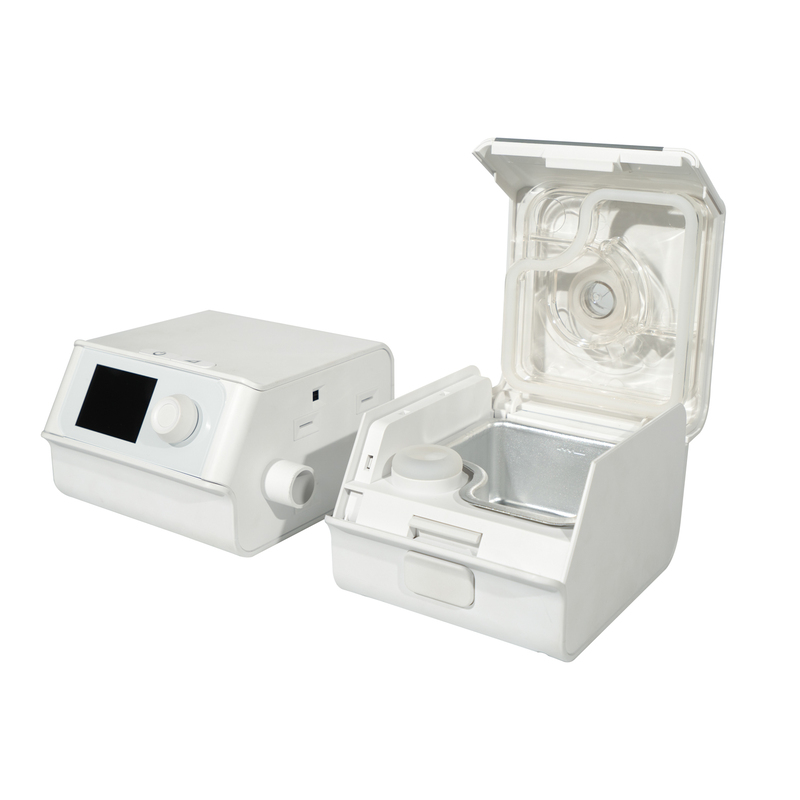
The core unit contains a motor that draws in ambient air, filters it through a replaceable intake filter, and pressurizes it to the prescribed level. Modern machines include a pressure sensor that monitors airflow and can detect apnea events, mask leaks, and breathing patterns. Most units also have a data recording capability that tracks your therapy compliance and effectiveness. The CPAP machine available at CPAP Kuwait features auto-adjusting pressure, built-in data tracking, and whisper-quiet operation.
The Humidifier
A heated humidifier adds moisture to the pressurized air before it reaches your mask. This is particularly important in Kuwait's dry climate, as it prevents nasal dryness, congestion, nosebleeds, and dry mouth — some of the most common reasons people stop using CPAP. The humidity level is adjustable to suit your comfort. Our integrated heated humidifier attaches directly to the machine for a compact setup.
The Tube / Hose
A standard CPAP tube is approximately 6 feet (1.8 meters) long, providing enough length for comfortable movement during sleep. Heated tubes are available that maintain the temperature of humidified air, preventing water condensation inside the hose (commonly called "rainout"). Our CPAP tube is lightweight and designed for maximum comfort.
The Mask
The mask is arguably the most important component for comfort and therapy success. There are three main types:
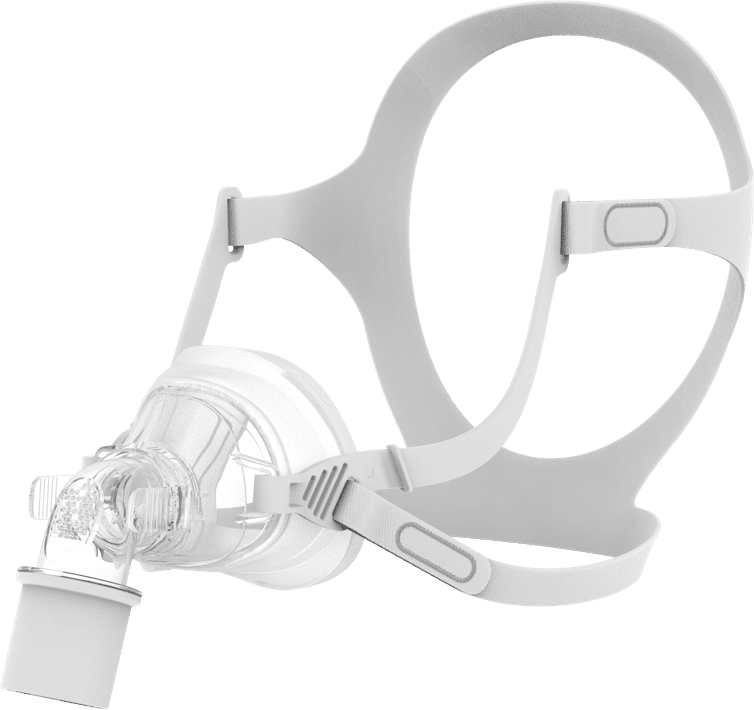
- Nasal mask — covers only the nose. Ideal for people who breathe through their nose and prefer a lighter, less intrusive fit. See our nasal mask.
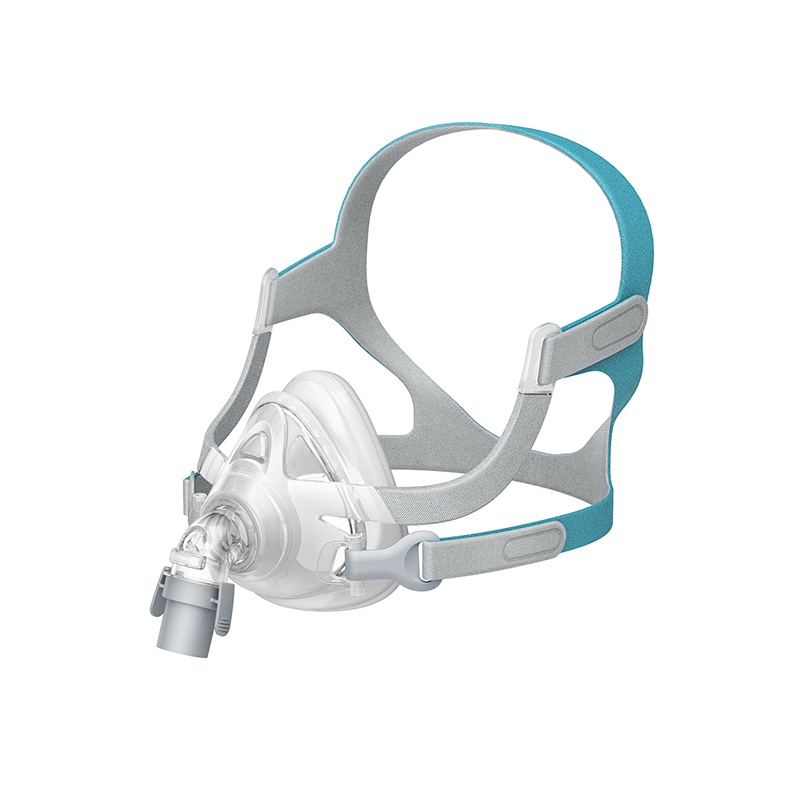
- Full face mask — covers both the nose and mouth. Best for mouth breathers or those who experience frequent nasal congestion. See our full face mask.
- Nasal pillows — small cushions that sit at the entrance of the nostrils. The most minimal option, popular with people who feel claustrophobic with larger masks.
Choosing the right mask is critical. Our mask selection guide can help you find the best fit for your face shape and sleep style.
Types of PAP Devices
While "CPAP" is the most commonly used term, there are actually several types of positive airway pressure therapy. Understanding the differences helps you know what you are using and why.
CPAP (Fixed Pressure)
A standard CPAP machine delivers one fixed pressure all night long. This pressure is determined during a sleep study (titration study) and set by your sleep specialist. The pressure stays the same whether you are in deep sleep, light sleep, or experiencing an apnea event.
APAP (Auto-Adjusting Pressure)
An APAP (Automatic Positive Airway Pressure) machine — also called auto-CPAP — automatically adjusts the pressure breath by breath within a prescribed range. It increases pressure when it detects airway obstruction and lowers it when the airway is clear. This typically results in a lower average pressure and greater comfort for the user.
The device we offer at CPAP Kuwait is an APAP machine, which is commonly referred to as "CPAP" in everyday language. It provides the benefits of auto-adjusting pressure while being simpler to set up — no titration study is required to determine a fixed pressure. For a detailed comparison, read our CPAP vs APAP guide.
BiPAP (Two Pressures)
A BiPAP (Bilevel Positive Airway Pressure) machine delivers two different pressures: a higher pressure when you breathe in (inspiratory) and a lower pressure when you breathe out (expiratory). This is prescribed for patients with complex sleep apnea, central sleep apnea, or certain respiratory conditions like COPD. BiPAP machines are typically more expensive and require a specialist prescription.
Benefits of CPAP Therapy
Consistent CPAP use provides wide-ranging health benefits that extend far beyond simply stopping snoring. According to research published by the AASM and the Mayo Clinic, the benefits include:
- Better sleep quality — By eliminating breathing interruptions, CPAP allows you to reach and maintain the deep, restorative stages of sleep that your body needs.
- Reduced or eliminated snoring — Since the airway stays open, the vibration that causes snoring is prevented. This benefits both you and your bed partner.
- Lower blood pressure — Studies show that consistent CPAP use can reduce both daytime and nighttime blood pressure, particularly in patients with resistant hypertension.
- Improved concentration and memory — Better sleep means better cognitive function, sharper focus, and improved short-term memory.
- Reduced accident risk — By eliminating excessive daytime sleepiness, CPAP significantly reduces the risk of motor vehicle and workplace accidents.
- Better mood and emotional well-being — Patients commonly report reduced irritability, anxiety, and depressive symptoms after beginning CPAP therapy.
- Reduced cardiovascular risk — Long-term CPAP use lowers the risk of heart disease, stroke, and atrial fibrillation associated with untreated sleep apnea.
- Improved blood sugar control — CPAP therapy can improve insulin sensitivity in patients with both OSA and type 2 diabetes.
Who Needs a CPAP Machine
CPAP therapy is prescribed for people who have been diagnosed with obstructive sleep apnea through a sleep study (polysomnography or home sleep test). Specifically:
- Moderate to severe OSA (AHI > 15) — CPAP is the standard first-line treatment recommended by the AASM.
- Mild OSA (AHI 5–15) with significant symptoms — If you have mild sleep apnea but suffer from excessive daytime sleepiness, high blood pressure, or cardiovascular disease, your physician may prescribe CPAP.
- Patients who have not responded to other treatments — If lifestyle changes or oral appliances have not adequately controlled your sleep apnea.
A prescription is required. CPAP is a medical device, and a sleep specialist must prescribe it based on your sleep study results. Self-diagnosing and self-treating sleep apnea without medical oversight is not recommended.
If you suspect you have sleep apnea but have not yet been diagnosed, the first step is to get a sleep test. Your physician can then determine whether CPAP therapy is right for you.
Getting Started
Starting CPAP therapy involves several steps. Here is a clear path from suspicion of sleep apnea to your first night of therapy:
- Get diagnosed. Visit your physician and discuss your symptoms. They will refer you for a sleep test at a sleep center or provide a home sleep test device. The test results will determine whether you have sleep apnea and how severe it is.
- Get a prescription. Based on your AHI score and clinical evaluation, your sleep specialist will prescribe CPAP or APAP therapy with a specific pressure range.
- Choose your device. Select a CPAP/APAP machine that meets your prescription requirements. At CPAP Kuwait, we offer an auto-adjusting CPAP machine along with essential accessories including a heated humidifier and tube.
- Choose the right mask. This is one of the most important decisions for long-term comfort and compliance. Read our mask selection guide to find the right type for your face shape, breathing habits, and sleep position. We offer both nasal masks and full face masks.
- Start therapy and adjust. Give yourself two to four weeks to adapt. It is normal to need time to get used to wearing a mask and sleeping with pressurized air. Our tips for new users guide provides practical advice for a smooth adjustment period.
Consistency is the key to successful CPAP therapy. Research shows that using your CPAP for at least four hours per night, every night, is the minimum threshold for meaningful health benefits — but the more you use it, the better you will feel.