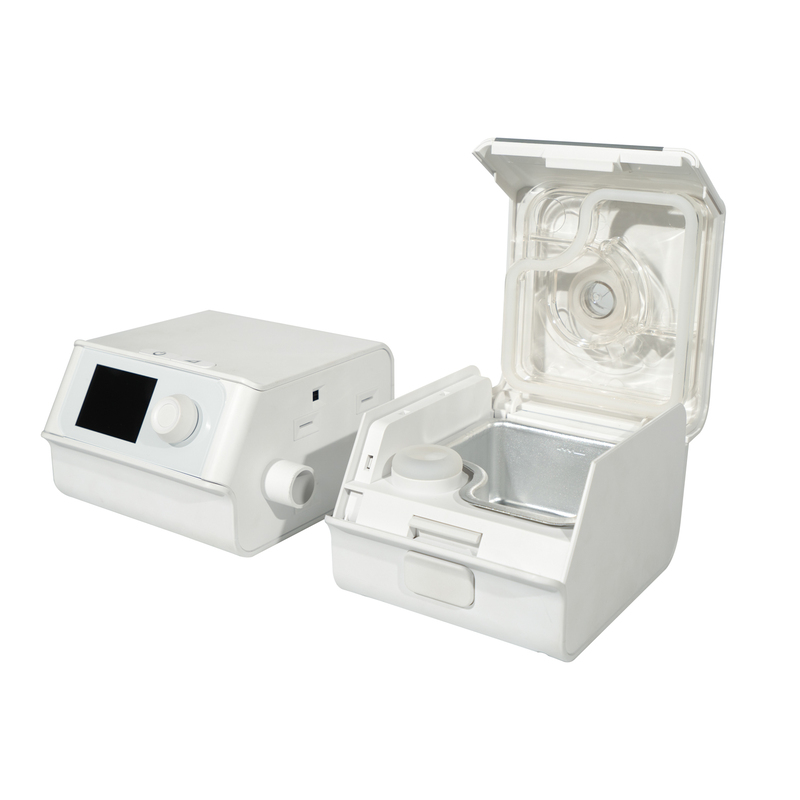
Overview
APAP (Auto-adjusting Positive Airway Pressure) automatically adjusts air pressure breath by breath, while CPAP (Continuous Positive Airway Pressure) delivers a single fixed pressure all night. Both effectively treat obstructive sleep apnea (OSA). APAP is the newer technology and is often preferred for its comfort and adaptability.
What is CPAP (Fixed Pressure)
A CPAP machine delivers a continuous stream of pressurized air at one fixed setting throughout the entire night. The pressure level is determined during a sleep study (polysomnography) or a titration study, where a sleep specialist identifies the single pressure that eliminates apneas, hypopneas, and snoring across all sleep stages and body positions. Once set, the machine maintains that exact pressure from the moment you turn it on until you wake up.
CPAP has been the gold standard treatment for obstructive sleep apnea since it was introduced in 1981 by Professor Colin Sullivan. According to the American Academy of Sleep Medicine (AASM), positive airway pressure therapy remains the first-line treatment for moderate to severe OSA in adults. To learn more about how these machines work, see our complete guide to CPAP machines.
How Fixed Pressure Works
The machine uses a motor-driven fan to generate a constant column of air delivered through a hose and mask. This air acts as a pneumatic splint, keeping the soft tissues of the upper airway from collapsing during sleep. The prescribed pressure is measured in centimeters of water pressure (cmH2O), typically ranging from 4 to 20 cmH2O.
Who Benefits Most from CPAP
- Patients with stable, consistent pressure needs across all sleep positions and stages
- Those who have completed an in-lab titration study and respond well to a single pressure
- Patients who prefer the simplicity and predictability of a fixed setting
- Individuals with central sleep apnea or complex sleep apnea (where auto-adjusting algorithms may not respond appropriately)
What is APAP (Auto-Adjusting)
An APAP machine (also called Auto-CPAP or AutoPAP) continuously monitors your breathing and automatically adjusts the delivered pressure on a breath-by-breath basis. Rather than a single fixed pressure, the sleep specialist sets a minimum and maximum pressure range (for example, 5 to 15 cmH2O). The machine's algorithm then determines the optimal pressure within that range at any given moment.
APAP devices use built-in sensors and proprietary algorithms to detect airway events such as apneas, hypopneas, flow limitation, and snoring. When an event is detected, the machine gradually increases pressure until normal breathing is restored. When your airway is stable, the machine reduces pressure to the minimum needed, improving comfort. This is the technology used in the APAP machines we provide at CPAP Kuwait.
How Auto-Adjusting Pressure Works
The device analyzes airflow patterns in real time. It detects subtle changes in flow that indicate partial or complete airway obstruction. In response, it raises pressure incrementally until the obstruction resolves. During periods of stable breathing, such as REM sleep when you may need higher pressure or during light sleep when you need less, the machine adjusts accordingly. This dynamic response means the average pressure delivered throughout the night is typically lower than the fixed pressure a CPAP would use.
Who Benefits Most from APAP
- New users who have not yet completed an in-lab titration study
- Side sleepers and those who change positions frequently during the night
- Patients whose pressure needs vary due to nasal congestion, seasonal allergies, or weight changes
- Travelers who sleep in different environments and elevations
- Those who found fixed CPAP pressure uncomfortable and had difficulty with compliance
Key Differences
While both CPAP and APAP treat OSA by delivering pressurized air through a mask, they differ in several important ways. Understanding these differences can help you and your sleep specialist choose the most appropriate therapy.
Pressure Delivery
CPAP delivers one fixed pressure from start to finish. APAP continuously varies pressure within a prescribed range based on real-time airflow analysis. A study published in the Journal of Clinical Sleep Medicine found that APAP users experienced significantly lower mean treatment pressures compared to fixed CPAP, while achieving equivalent therapeutic outcomes.
Comfort and Compliance
Because APAP reduces pressure when your airway is stable, many patients find it more comfortable, especially during the initial adjustment period. The AASM notes that patient preference and comfort are important factors in long-term PAP adherence, and APAP can help patients who struggle with the constant high pressure of fixed CPAP. Mayo Clinic recommends discussing auto-titrating devices with your sleep specialist if fixed pressure causes discomfort.
Prescribed Settings
Fixed CPAP requires a specific single pressure determined by an in-lab titration or a home sleep study with follow-up adjustment. APAP requires a minimum and maximum pressure range, which can be set based on diagnostic data without a separate titration study. This makes APAP a practical choice when in-lab titration is not readily available.
Technology
APAP machines contain more advanced sensors and algorithms than basic CPAP machines. They monitor airflow, detect events, and respond dynamically. Most modern APAP devices also function in fixed CPAP mode, giving you the flexibility to switch modes if recommended by your physician.
Comparison Table
| Feature | CPAP (Fixed) | APAP (Auto) |
|---|---|---|
| Pressure | Single fixed pressure all night | Auto-adjusts within a set range |
| Comfort | Constant pressure may feel excessive during light sleep | Reduces pressure when not needed; higher comfort for most users |
| Cost | Generally lower initial cost | Slightly higher; often offset by better compliance |
| Best For | Stable pressure needs, central or complex sleep apnea | New users, position changers, varying pressure needs |
| Prescription | Requires titration to determine exact pressure | Pressure range set; no separate titration needed |
| Noise Level | Consistent low noise at fixed speed | Varies slightly with pressure changes; modern devices are quiet (under 30 dB) |
| Travel Suitability | Good; fixed settings are simple | Excellent; adapts to altitude and environment changes automatically |
Which is Right for You
The best choice depends on your specific condition, sleep habits, and personal preferences. Here is a guide to help you decide, though you should always consult your sleep specialist before making a final decision.
APAP May Be Right for You If
- You are a new user starting PAP therapy for the first time
- You sleep on your side or change positions frequently during the night
- You experience seasonal allergies or nasal congestion that affects your pressure needs
- You travel frequently and sleep in different environments
- You found fixed CPAP uncomfortable and want a more adaptive experience
- Your weight fluctuates, which can change your optimal pressure over time
- You have not had an in-lab titration study and want to start therapy sooner
CPAP May Be Right for You If
- You have stable, well-documented pressure needs confirmed by a titration study
- You have central sleep apnea or complex sleep apnea syndrome, where auto algorithms may not respond appropriately
- You prefer the consistency and predictability of a fixed pressure
- You sleep primarily on your back and your pressure needs do not vary significantly
Regardless of which device you choose, selecting the right mask is equally important for therapy success. See our guide to choosing a CPAP mask to find the best fit for your face shape and sleep style.
Cost & Availability in Kuwait
APAP machines are slightly more expensive than basic CPAP machines due to the advanced sensor technology and algorithms they contain. However, the cost difference has narrowed significantly in recent years, and many sleep specialists now prescribe APAP as the default option because of its comfort advantages and the potential for better long-term adherence.
Better compliance means more effective treatment, which can reduce long-term healthcare costs associated with untreated sleep apnea, including cardiovascular complications, daytime accidents, and decreased productivity. According to the AASM, consistent PAP use of at least 4 hours per night is associated with significant improvements in quality of life and reduction in comorbid health risks.
At CPAP Kuwait, we provide a high-quality APAP machine at a competitive price of 145 KWD. Our device operates in both auto and fixed modes, giving you and your physician full flexibility. Visit our APAP machine product page for full specifications, or contact us via WhatsApp to discuss which option is best for your needs.
Whether you choose CPAP or APAP, the most important factor is using your device consistently every night. Both machines are proven to treat obstructive sleep apnea effectively when used as prescribed. The best machine is the one you will use comfortably and consistently.