Overview
Sleep apnea is a serious sleep disorder in which breathing repeatedly stops and restarts throughout the night. These pauses — called apneas — can last ten seconds or longer and may occur dozens or even hundreds of times per night, starving the brain and body of oxygen.
According to a landmark 2019 study published in The Lancet Respiratory Medicine, an estimated 936 million adults aged 30 to 69 worldwide have obstructive sleep apnea of at least mild severity. The condition affects roughly 4% of men and 2% of women in the general population, though many cases remain undiagnosed. In the Gulf region, rising obesity rates have made sleep apnea an increasingly significant public health concern.
Left untreated, sleep apnea can lead to high blood pressure, heart disease, stroke, type 2 diabetes, and dangerous daytime drowsiness. The good news is that effective treatments exist — most notably CPAP therapy, which is considered the gold standard for moderate to severe obstructive sleep apnea.
Types of Sleep Apnea
There are three main types of sleep apnea. Understanding which type you have is essential because each has different causes and may require different treatment approaches.
1. Obstructive Sleep Apnea (OSA)
Obstructive sleep apnea is by far the most common form, accounting for approximately 84% of all sleep apnea diagnoses according to the American Academy of Sleep Medicine (AASM). It occurs when the muscles in the back of the throat relax excessively during sleep, causing the soft tissue to collapse and block the upper airway. The brain senses the drop in oxygen and briefly wakes you — usually so briefly that you do not remember it — to reopen the airway.
2. Central Sleep Apnea (CSA)
Central sleep apnea is less common and involves the brain failing to send the proper signals to the muscles that control breathing. Unlike OSA, there is no physical blockage of the airway. CSA is often associated with heart failure, stroke, or the use of opioid medications. Treatment may involve BiPAP therapy or adaptive servo-ventilation rather than standard CPAP.
3. Complex (Mixed) Sleep Apnea
Complex sleep apnea syndrome — also called treatment-emergent central sleep apnea — occurs when someone has both obstructive and central sleep apnea. It is sometimes discovered when a patient begins CPAP therapy for OSA and central apnea events persist or emerge. A sleep specialist may adjust the therapy or switch to a different device to manage both components.
Symptoms
Many people with sleep apnea do not realize they have it. A bed partner is often the first to notice the telltale signs. According to the Mayo Clinic, the most common symptoms of sleep apnea include:
- Loud, chronic snoring — especially in obstructive sleep apnea. Snoring may be loud enough to disturb your partner or even wake yourself.
- Witnessed breathing pauses — your bed partner observes episodes where you stop breathing during sleep.
- Gasping or choking during sleep — abrupt awakenings accompanied by a sensation of shortness of breath.
- Excessive daytime sleepiness — feeling excessively tired during the day despite spending enough hours in bed, often falling asleep during work, while reading, or while watching television.
- Morning headaches — caused by fluctuations in oxygen and carbon dioxide levels during the night.
- Difficulty concentrating — memory problems, trouble focusing on tasks, and reduced cognitive performance.
- Irritability and mood changes — increased anxiety, depression, or mood swings related to poor sleep quality.
- Dry mouth or sore throat on waking — caused by breathing through the mouth during sleep.
- Frequent nighttime urination (nocturia) — waking multiple times during the night to use the bathroom.
- Reduced libido — sleep disruption can affect hormone levels and sexual function.
If you experience several of these symptoms — particularly loud snoring combined with daytime sleepiness — it is important to consult a physician. A proper diagnosis requires a sleep study.
Causes
The underlying cause depends on the type of sleep apnea, but the most common form — obstructive sleep apnea — is caused by physical and anatomical factors that narrow or block the airway during sleep.
- Relaxation of throat muscles — During sleep, the muscles supporting the soft palate, uvula, tonsils, and tongue relax. In some people this relaxation is enough to narrow or close the airway.
- Excess body weight — Fat deposits around the upper airway can increase the risk of obstruction. Approximately 70% of people with OSA are overweight or obese.
- Large neck circumference — A thicker neck may indicate more tissue that can block the airway (greater than 17 inches in men or 16 inches in women is a risk factor).
- Narrow airway — Some people inherit naturally narrower airways. Enlarged tonsils or adenoids — especially in children — can also obstruct airflow.
- Age — Sleep apnea is more common in middle-aged and older adults as muscle tone decreases with age.
- Family history — Having family members with sleep apnea increases your likelihood of developing the condition.
- Alcohol and sedatives — These substances relax the throat muscles more than normal, worsening airway obstruction.
- Smoking — Smokers are three times more likely to develop OSA than nonsmokers, due to inflammation and fluid retention in the upper airway.
- Nasal congestion — Chronic nasal obstruction from allergies, a deviated septum, or sinus problems increases the risk.
Risk Factors
While anyone can develop sleep apnea — including children — certain factors significantly increase your risk. The following table summarizes the primary risk factors identified by the AASM and the World Health Organization (WHO):
| Risk Factor | Details |
|---|---|
| Obesity (BMI > 30) | The strongest modifiable risk factor. Each 10% increase in body weight increases OSA risk by approximately sixfold. |
| Male sex | Men are two to three times more likely to develop sleep apnea than premenopausal women. Risk equalizes after menopause. |
| Age over 40 | Prevalence increases with age, peaking between 50 and 70 years. |
| Large neck circumference | Greater than 17 inches (43 cm) in men or 16 inches (41 cm) in women. |
| Family history | Genetic predisposition due to inherited craniofacial structure and body fat distribution. |
| Smoking | Increases upper airway inflammation and fluid retention. Risk decreases after quitting. |
| Alcohol use | Relaxes upper airway muscles and can increase the duration and frequency of apnea events. |
In the Gulf region, the high prevalence of obesity and type 2 diabetes means that sleep apnea is likely significantly underdiagnosed. If you have two or more of these risk factors, a sleep test is strongly recommended.
Complications
Untreated sleep apnea is far more than a nuisance — it is a significant threat to long-term health. The repeated drops in blood oxygen, surges in blood pressure, and chronic sleep fragmentation place enormous stress on the cardiovascular system and metabolic health.
- High blood pressure (hypertension) — The sudden drops in oxygen during apnea events trigger a surge in blood pressure. Untreated OSA is a leading cause of resistant hypertension.
- Heart disease and heart failure — Research published by the American Heart Association shows that untreated OSA increases cardiovascular risk by approximately 30%, including coronary artery disease, atrial fibrillation, and heart failure.
- Stroke — The combination of oxygen desaturation and blood pressure spikes substantially increases the risk of ischemic stroke.
- Type 2 diabetes — OSA worsens insulin resistance. Up to 71% of people with type 2 diabetes have some degree of sleep apnea.
- Liver problems — Patients with OSA are more likely to show signs of non-alcoholic fatty liver disease and liver fibrosis.
- Daytime fatigue and accidents — Excessive sleepiness from untreated sleep apnea increases the risk of motor vehicle accidents by two to three times. Workplace accidents and reduced productivity are also significant concerns.
- Mental health — Chronic sleep disruption is linked to depression, anxiety, and cognitive decline.
- Relationship strain — Loud snoring and restless sleep often force partners to sleep separately, affecting relationship quality.
The good news is that treating sleep apnea — particularly with CPAP therapy — can significantly reduce these risks and improve quality of life.
Diagnosis
A proper diagnosis of sleep apnea requires a sleep study, which can be conducted in a hospital sleep lab or at home using a portable monitoring device. Your physician will evaluate your symptoms, medical history, and physical examination before recommending the appropriate test.
Polysomnography (In-Lab Sleep Study)
Polysomnography is the gold standard diagnostic test. You spend a night at a sleep center where sensors monitor your brain activity, eye movements, heart rate, blood oxygen levels, airflow, chest and abdominal movement, and leg movements. A sleep technician supervises the study overnight.
Home Sleep Apnea Test (HSAT)
For patients with a high likelihood of moderate to severe OSA and no significant comorbidities, a home sleep test may be appropriate. The device is simpler, measuring airflow, breathing effort, and blood oxygen levels. While more convenient, it may underestimate the severity of sleep apnea.
Understanding Your AHI Score
The key metric from a sleep study is the Apnea-Hypopnea Index (AHI), which measures the number of apnea and hypopnea events per hour of sleep. According to AASM guidelines:
| AHI Range | Severity | Typical Treatment |
|---|---|---|
| 5 – 15 events/hour | Mild | Lifestyle changes, positional therapy, or oral appliance |
| 15 – 30 events/hour | Moderate | CPAP therapy (first-line recommendation) |
| > 30 events/hour | Severe | CPAP therapy (essential) |
If you are in Kuwait, our guide to getting a sleep test in Kuwait provides information on available sleep study centers and what to expect.
Treatment
Treatment for sleep apnea depends on the severity and type. The goal is to normalize breathing during sleep, improve oxygen levels, and eliminate symptoms such as snoring and daytime sleepiness.
CPAP Therapy — The Gold Standard
Continuous Positive Airway Pressure (CPAP) therapy is the first-line treatment recommended by the AASM for moderate to severe obstructive sleep apnea. A CPAP machine delivers a steady stream of pressurized air through a mask, keeping the airway open throughout the night. When used consistently, CPAP therapy eliminates apnea events, restores normal oxygen levels, and dramatically improves sleep quality.
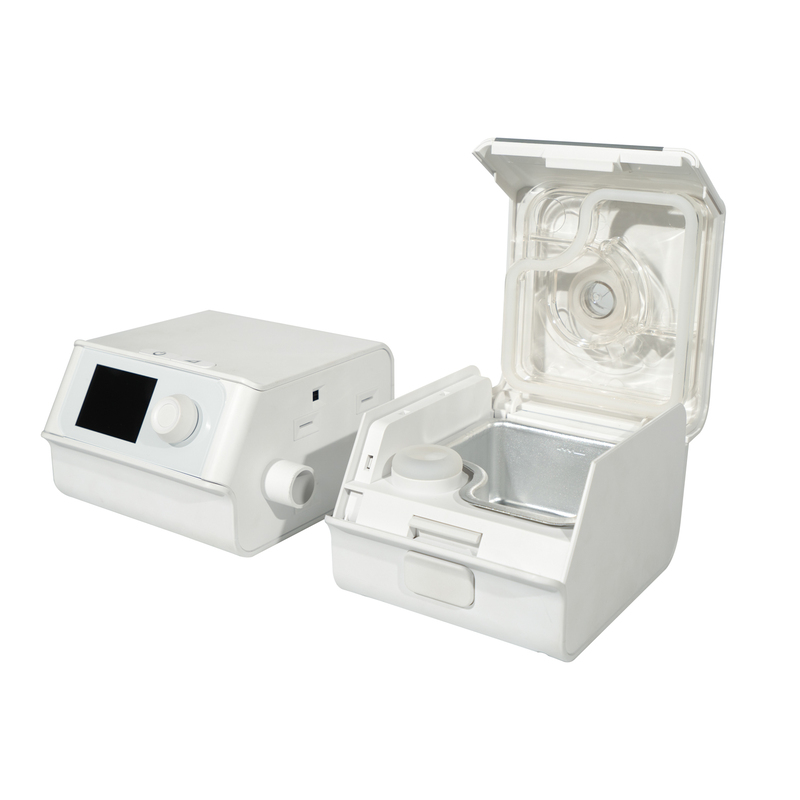
Modern CPAP devices — such as the auto-adjusting CPAP machine available at CPAP Kuwait — are quiet, compact, and automatically adjust pressure to your needs throughout the night.
Lifestyle Changes
- Weight loss — Even a 10% reduction in body weight can significantly reduce AHI severity. For some patients with mild OSA, weight loss alone may resolve the condition.
- Exercise — Regular physical activity improves sleep quality and can reduce apnea severity even without significant weight loss.
- Sleep position — Sleeping on your side instead of your back can reduce airway obstruction in many patients.
- Avoiding alcohol and sedatives — Especially in the hours before bedtime, as these relax the throat muscles.
- Quitting smoking — Reduces upper airway inflammation and swelling.
Oral Appliances
For mild to moderate OSA, a dentist-fitted mandibular advancement device (MAD) can hold the lower jaw forward to keep the airway open. While less effective than CPAP for severe cases, oral appliances are a reasonable alternative for patients who cannot tolerate CPAP.
Surgery
Surgery is generally considered only when other treatments have failed or when there is an identifiable anatomical obstruction. Options include uvulopalatopharyngoplasty (UPPP), tonsillectomy, and maxillomandibular advancement. Surgery is not guaranteed to eliminate OSA and carries typical surgical risks.
When to See a Doctor
You should consult a physician if you or your bed partner notice any of the following:
- Loud snoring that disrupts your or your partner's sleep
- Your partner witnesses episodes where you stop breathing during sleep
- You wake up gasping or choking
- Excessive daytime sleepiness that interferes with daily activities, work, or driving safety
- Morning headaches that occur regularly without another explanation
- You have known risk factors (obesity, large neck, family history) and are experiencing sleep-related symptoms
In Kuwait, sleep studies are available at several government and private hospitals. Your primary care physician or an ENT specialist can refer you to a sleep medicine specialist. Visit our sleep test page for more information on getting tested in Kuwait.
Early diagnosis and treatment can prevent the serious health complications associated with sleep apnea and restore restful, restorative sleep. Do not delay seeking medical advice — effective treatment is available and can transform your quality of life.